Pretoria CBD, Tshwane · Social Housing
Living Stones, Inner-City Pretoria
What this story helps churches see
An existing church building can hold worship and community use in the same place.
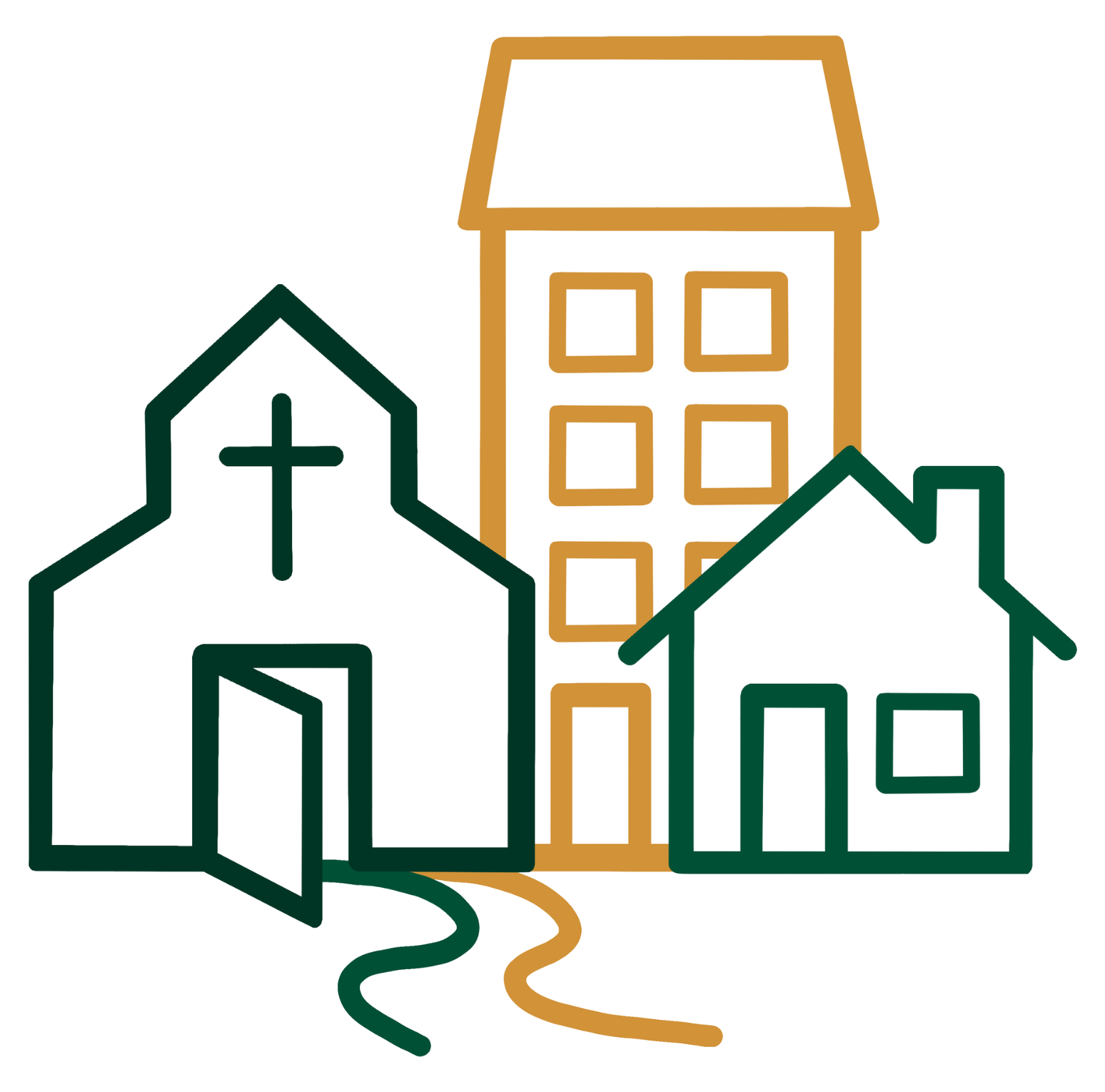
A Methodist church in inner-city Pretoria opened the roof of its property for 27 communal housing units and one institutional unit, built in partnership with Yeast City Housing. The congregation still worships below, and the building continues to function as affordable housing alongside small enterprises, a daycare, an HIV/AIDS care centre, and a refugee office.
The Methodist Church property sits in the Pretoria CBD, on a parcel of inner-city land that has been in denominational hands for decades. The building has a worship facility, a hall, and — for much of its history — a flat roof on the first floor that did very little.
The question that opened everything was not about housing. It was about what the roof was for.
The process
In partnership with Yeast City Housing, a Christian housing company that has spent the last twenty years developing affordable housing in inner-city Tshwane, the congregation worked through what it would mean to build above their worship space. Yeast City Housing has, over that period, developed more than 1,261 affordable housing units in the inner city — including creative partnerships with churches.
The Living Stones project grew upward rather than the church being sold off. The building still serves worship below and housing above today.
Note: Ownership structures around Yeast City Housing have shifted in recent years following changes inside that organisation. The building continues to operate as affordable housing in connection with the church.
What was built
Above the worship space sit 27 communal housing units and one institutional housing unit. Below them, the building holds the original worship facility plus small enterprises, a daycare centre, an HIV/AIDS care centre, and a refugee office.
George Mokadi, a resident and caretaker of the development, lives in the building. He describes how community is held when conflict arises:
We have a meeting and discuss it, there is process, a graceful process. That is something I brought from the village which helps us here. And many people here are from the villages actually, and they ended up here. We have a good atmosphere where people care.
What they learned
The most striking thing about Living Stones is what did not change. The congregation still worships in the same room. The building continues to serve more uses, more people, more lives.
For congregations weighing what their land might do, the lesson is concrete: the roof, the hall, the parking lot — the bits of property that do almost nothing for most of the week — are often the most generous starting point.
Sources
- Powell, C. (2021), Fostering a Praxis of Spatial Justice in Suburban Churches, MTh thesis, University of Pretoria. Download PDF
- Powell, C. & Mlambo, N. (2022), Space, Place and the Church, International Journal of Public Theology 16(1), pp. 74–88. Download PDF
- Yeast City Housing (2018), Yeast City Housing, Tandym Print — primary source for the George Mokadi quotes.
- Yeast City Housing, Living Stones project page.
Continue your discernment